

If you are trying to understand how much post-construction cleaning costs in Longwood, FL, there is no single price that applies to every property. The final cost depends on the size of the area, the surfaces involved, and the amount of construction dust left behind. The level of detailed work also makes a significant difference.
A recent Dust Rush Cleaning project completed as part of our cleaning services in Longwood, FL is a useful real-world example. We cleaned approximately 1,600 sq. ft. of wood flooring after construction work. Fine construction dust had settled deep into the texture and pores of the floor. As a result, regular vacuuming and mopping were not enough. The total price for this specific floor-only project was $700.
How Much Did Our Longwood Post-Construction Project Cost?
For this particular Longwood project, the total price was $700. The job covered approximately 1,600 sq. ft. of wood flooring. The scope was specifically detailed post-construction floor cleaning.
This was not the price for cleaning an entire 1,600 sq. ft. home from top to bottom. We were hired to clean the flooring only. Therefore, the $700 price should be viewed as a real project example rather than a standard rate for a home of this size.
| Project Detail | Actual Longwood Project |
| Location | Longwood, FL |
| Service | Post-construction wood floor cleaning |
| Area cleaned | Approximately 1,600 sq. ft. |
| Main problem | Fine construction dust embedded in the texture and pores of the flooring |
| Scope | Floor cleaning only |
| Actual project price | $700 |
We share the actual price because it gives homeowners a useful reference point. However, another 1,600 sq. ft. project may cost more or less. The flooring type, surface condition, amount of dust, and level of detailing can all change the final price.
Why Post-Construction Cleaning Prices Can Vary So Much
Square footage is important when estimating professional post-construction cleaning. However, it does not tell the entire story. The condition of the property can make just as much difference.
For example, a large open floor with loose surface dust may require less work than a smaller textured floor. Fine construction particles can settle into seams, edges, pores, and other recessed areas. Those areas usually require more detailed attention.
The type of construction work matters as well. Cutting, sanding, drilling, drywall work, and other renovation activity can spread fine dust beyond the immediate work area. Some particles remain on the surface, while others settle into textured materials.
That was the main challenge on our Longwood project. The visible layer of dust was only part of the problem. Fine construction dust remained in the texture and pores of the wood flooring. Therefore, square footage alone did not accurately represent the amount of work required.
What Made This Longwood Project More Detailed?
The main challenge was the condition of the wood flooring after construction. The fine dust was not simply sitting on top of a smooth surface. Instead, particles had settled into the texture and pores of the flooring.
Because of this, one round of vacuuming and routine mopping would not have completed the job. We had to work through the flooring section by section. We also paid extra attention to areas where construction dust remained trapped below the surface texture.
Our goal was not aggressive scrubbing. Instead, we wanted to remove the construction dust as thoroughly as possible while working carefully with the existing flooring and finish. The project required several cleaning stages to accomplish that.
Step 1: Thorough HEPA Vacuuming
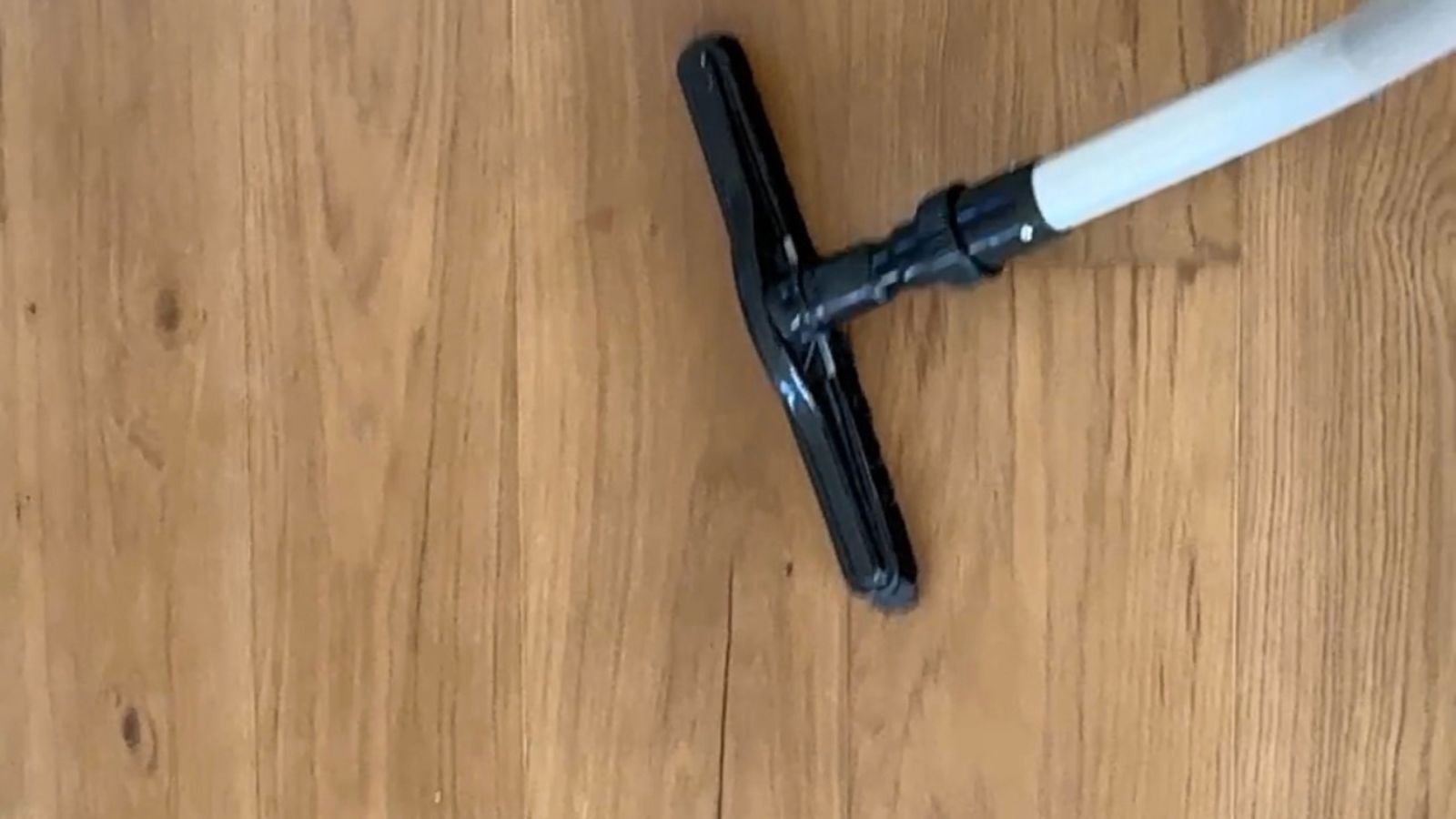
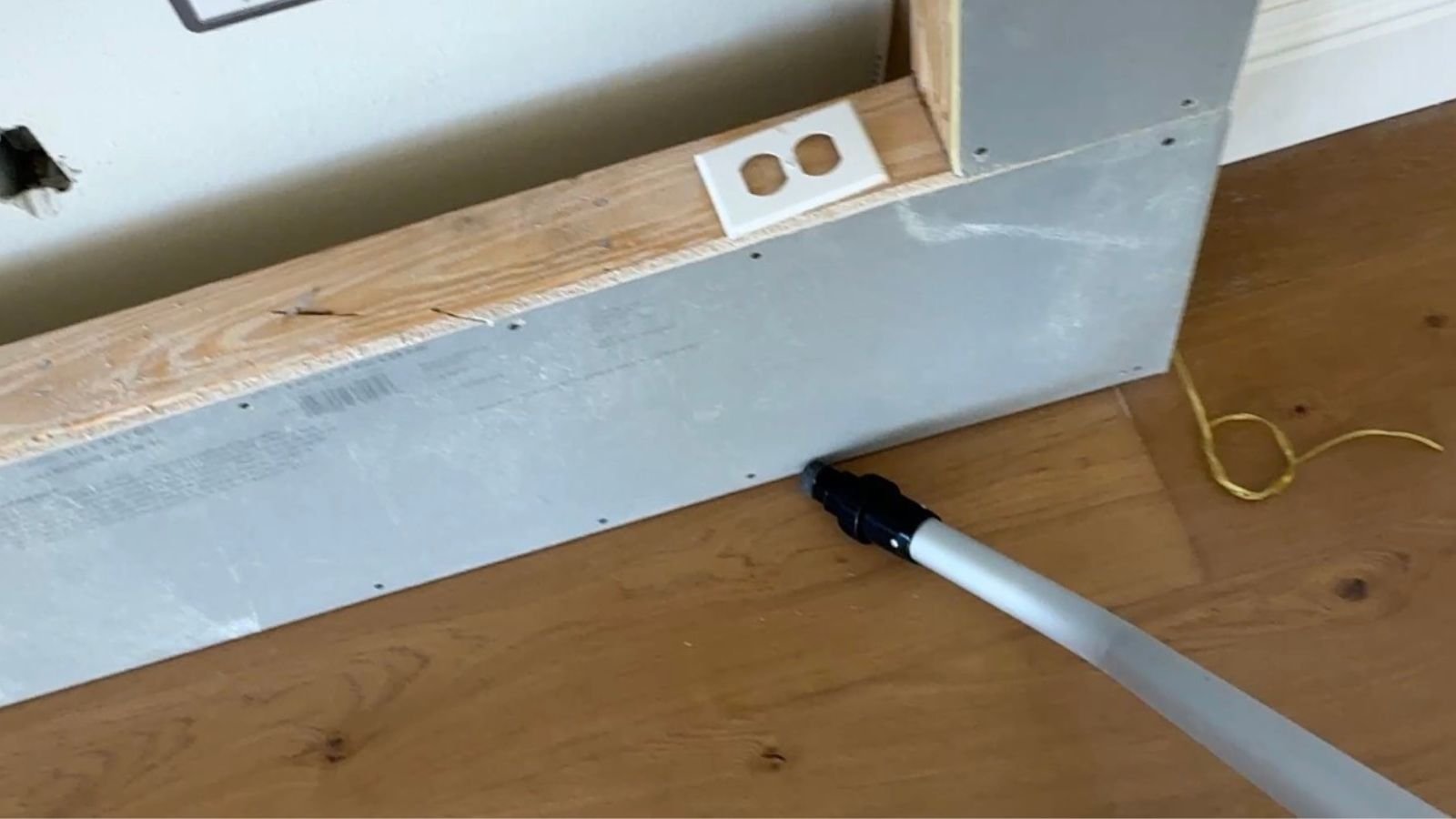
We started by thoroughly vacuuming the entire floor with a professional HEPA-filtered vacuum. This first step removed as much loose construction dust as possible before we introduced any cleaning solution.
We focused on the main surface as well as accessible seams, edges, and recessed areas. Removing the loose dry material first also made the remaining problem easier to identify.
After vacuuming, some construction dust was still visible in the texture of the flooring. Those areas required the more detailed stages of the cleaning process.
Step 2: A Cleaning Solution Selected for the Wood Flooring
After the initial vacuuming, we used a professional cleaning solution selected for the existing flooring. A stronger chemical does not automatically mean a better result, especially when working with wood.
Before choosing a cleaning method, we consider the flooring material and its existing finish. We also look at the condition of the floor and the type of construction residue that needs to be removed.
For this project, the solution helped loosen the remaining construction dust in the textured areas. This prepared the floor for the next stage of detailed cleaning.
However, the same method should not automatically be used on every wood floor. Flooring can vary in finish, texture, age, and condition. Therefore, the cleaning approach should be selected for the actual surface being cleaned.
Step 3: Detailed Cleaning With Nylon Brushes
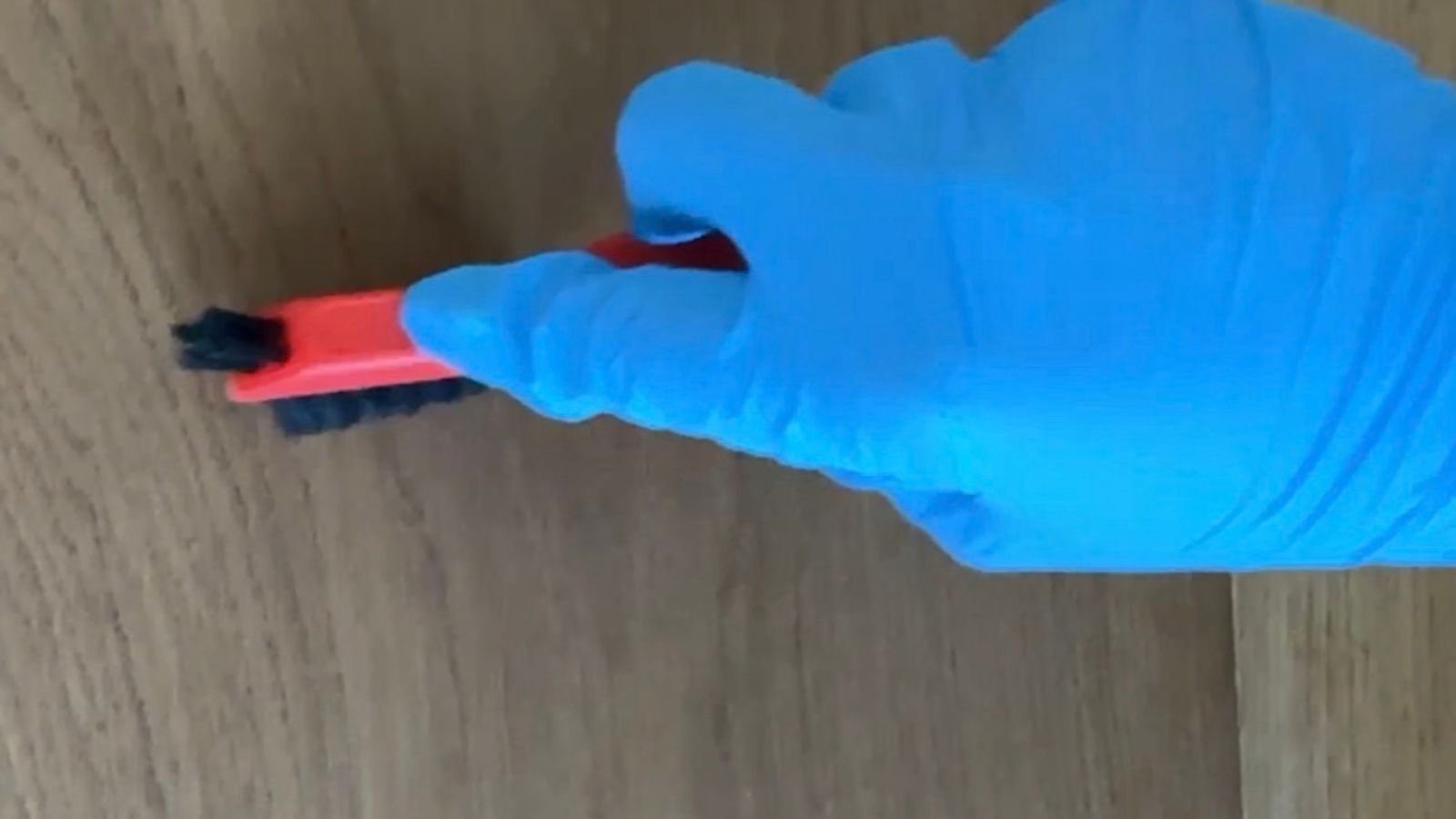
Next, we worked through the textured areas with nylon brushes. This stage addressed the fine construction dust that vacuuming alone could not remove.
We cleaned the floor section by section rather than aggressively scrubbing the entire area. The nylon brush helped work dust out of the textured surface. In many areas, that was enough.
However, some sections had dust that was more deeply embedded. In those specific areas, we carefully used other medium-stiffness brushes for targeted cleaning. We did not use those brushes across the entire 1,600 sq. ft. floor.
Throughout the process, the goal remained the same. We wanted to remove the construction dust while avoiding unnecessary aggressive treatment of the existing wood finish.
- HEPA vacuuming to remove loose fine construction dust before detailed cleaning
- Professional cleaning solution selected for the existing flooring and condition
- Nylon brushes to work remaining dust out of textured areas
- Medium-stiffness brushes used selectively where dust was more deeply embedded
- Section-by-section detailing instead of a routine vacuum-and-mop cleaning
What Affects Post-Construction Cleaning Cost?
When homeowners ask how much post-construction cleaning services cost, square footage is usually the first number available. Still, a reliable estimate needs more information. Two properties of the same size can require very different amounts of work.
- Square footage. Larger areas usually require more time. However, the condition of the property matters too.
- Scope of cleaning. Floor-only cleaning is different from cleaning an entire property after construction.
- Type of flooring or surface. Wood, tile, vinyl, stone, and other materials can require different products and cleaning methods.
- Amount of construction dust. Loose surface dust is usually easier to address than heavy fine dust throughout a textured surface.
- Depth of embedded dust. Dust trapped in pores, seams, edges, and recessed areas requires more detailed work.
- Construction residue. Paint, adhesive, grout, caulk, and other hardened materials may require separate evaluation.
- Accessibility. An open finished space is easier to clean than an area still occupied by workers, equipment, or construction materials.
- Manual detailing. Working on individual sections with brushes takes more time than routine floor cleaning.
For these reasons, we do not treat square footage as the only pricing factor. Photos and basic project information can help us understand the actual scope before the cleaning is scheduled.
Floor-Only Cleaning vs. Full Post-Construction Cleaning
This distinction is important when comparing prices. Our $700 Longwood project involved approximately 1,600 sq. ft. of flooring only. It should not be compared directly with the cost of cleaning an entire 1,600 sq. ft. home after construction.
A full post-construction cleaning can involve many additional surfaces. Depending on the property, the scope may include floors, counters, accessible vents, high surfaces, walls, kitchens, bathrooms, and other areas affected by construction dust.
The reason for the cleaning matters too. For example, an empty property being prepared before or after occupancy may need move-in and move-out cleaning rather than post-construction cleaning. The scope should match the actual condition of the home.
Glass can also require separate attention after renovation work. When it is included in the requested scope, our interior window cleaning can address interior glass, frames, sills, and light track cleaning. The amount of work depends on the number and condition of the windows.
Why Regular Floor Cleaning May Not Be Enough After Construction
Routine floor cleaning is mainly designed for everyday soil. This can include household dust, footprints, crumbs, pet hair, and ordinary surface dirt.
Construction dust can behave differently. Fine particles can settle into textured surfaces, seams, edges, and other recessed areas. As a result, a floor may still appear dusty after the loose material has been vacuumed away.
That is what we found on this Longwood project. Vacuuming removed the loose material, but some dust remained in the floor texture. Therefore, we continued with the selected cleaning solution and detailed brushing.
The difference is largely the amount of labor required. Vacuuming 1,600 sq. ft. is one task. Inspecting and detailing the same area section by section takes considerably more time.
Getting a Post-Construction Cleaning Estimate in Longwood, FL
The easiest way to get a useful estimate is to show us the actual condition of the property. At Dust Rush Cleaning, we evaluate the scope instead of assuming every construction cleanup requires the same amount of work.
If your property is in the area, you can also learn more about our Longwood cleaning services. We can review the type of cleaning you need and determine which service best matches the project.
When requesting an estimate, send the approximate square footage and photos of the areas that need cleaning. Also tell us what surfaces are involved and what type of construction or renovation work was completed.
It is also helpful to know whether the contractors have completely finished. If construction work is still taking place, new dust may continue to enter areas that have already been cleaned.
Finally, let us know about paint, adhesive, grout, caulk, or other construction residue. These materials may require separate evaluation instead of being treated as ordinary dust removal.
FAQ

This article was prepared by the expert team at Dust Rush Cleaning — your trusted partner for house cleaning in Oviedo, FL.